A dictionary of AI termsNEW
A dictionary of AI terms: Aha AI
One good comparison is usually enough.
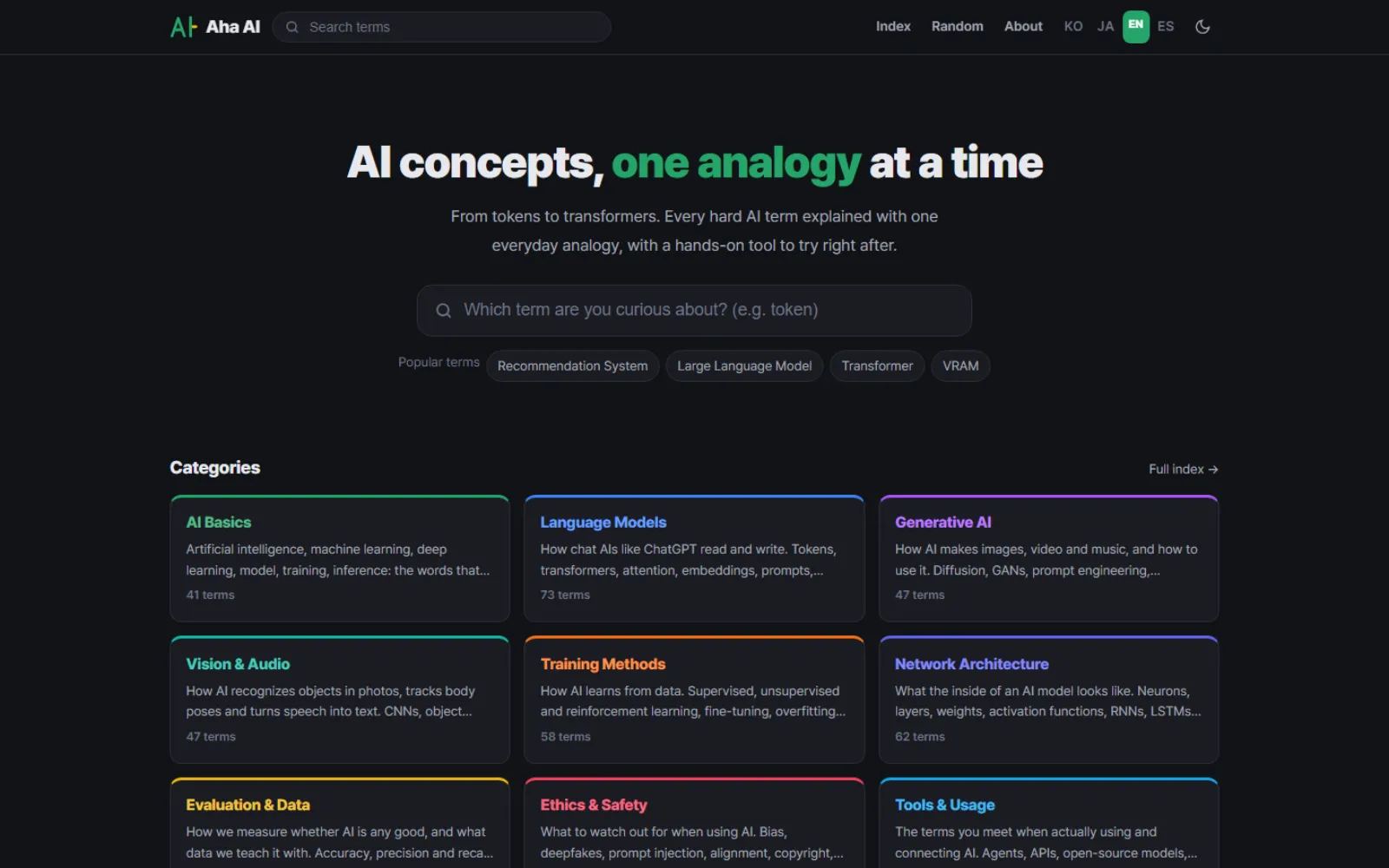
300 of the words that stop you halfway through an AI article — token, transformer, hallucination. Instead of leading with a definition, each entry borrows a scene you already know and draws the picture first.
AI terms are hard to explain mostly because they get explained with other hard terms. So every entry keeps the same six sections: understand by comparison, in more detail, to be more precise, try it yourself, common misreadings, one-line summary. It starts with the comparison but does not end there.
What makes it readable
One comparison per term
Each term borrows a single scene you already know. The scenes used are logged, so two different terms never reach for the same one.
No lettering inside the pictures
Text in the diagrams is text, not image. Change language and the words inside the drawing change with it — and it stays sharp however far you zoom.
Difficulty is marked
Entries are split into introductory, standard and advanced. If this is your first time, reading only the introductory ones finishes a whole category.
What is in it
- 300
- terms explained
- 9
- categories, from basics to ethics
- 6
- sections every entry keeps
- 4
- Korean · English · Japanese · Spanish
How it was built
Every entry keeps the same six sections
Comparison → detail → precision → try it → misreadings → one line. Whichever term you open, the order is the same, so from the second entry on you know where to look.
Misreadings get their own section
A comparison is comfortable, and a wrong one sets hard and lasts. So each entry says for itself: this far is the comparison, past here it is not.
You leave with something to try
The "try it yourself" section names one or two things you can check with the AI you already use. It is there so reading is not where it ends.
Terms are wired to each other
Related terms hang at the end of each entry. Arriving for one and leaving having read three or four is the normal pattern.
Categories and the index
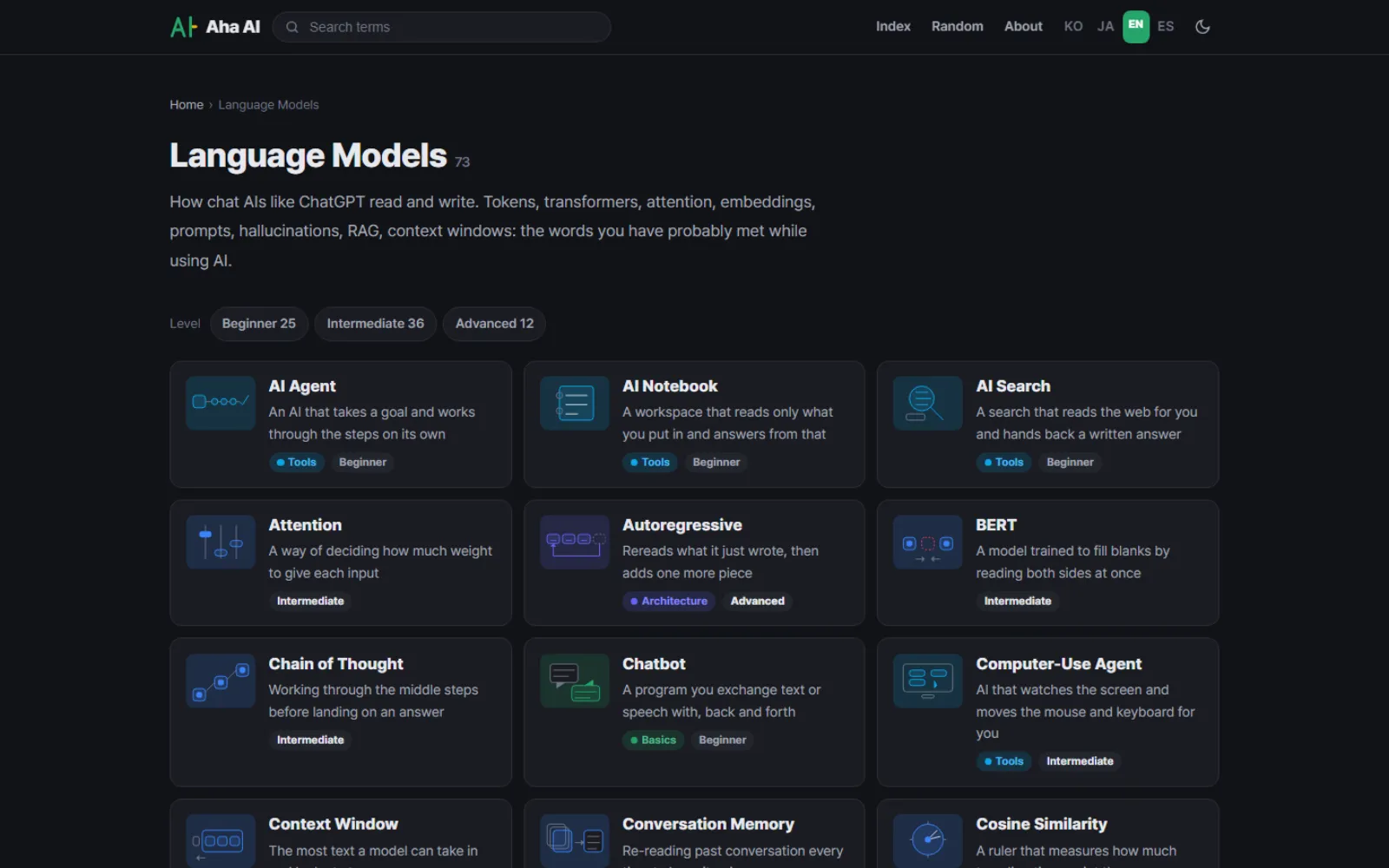
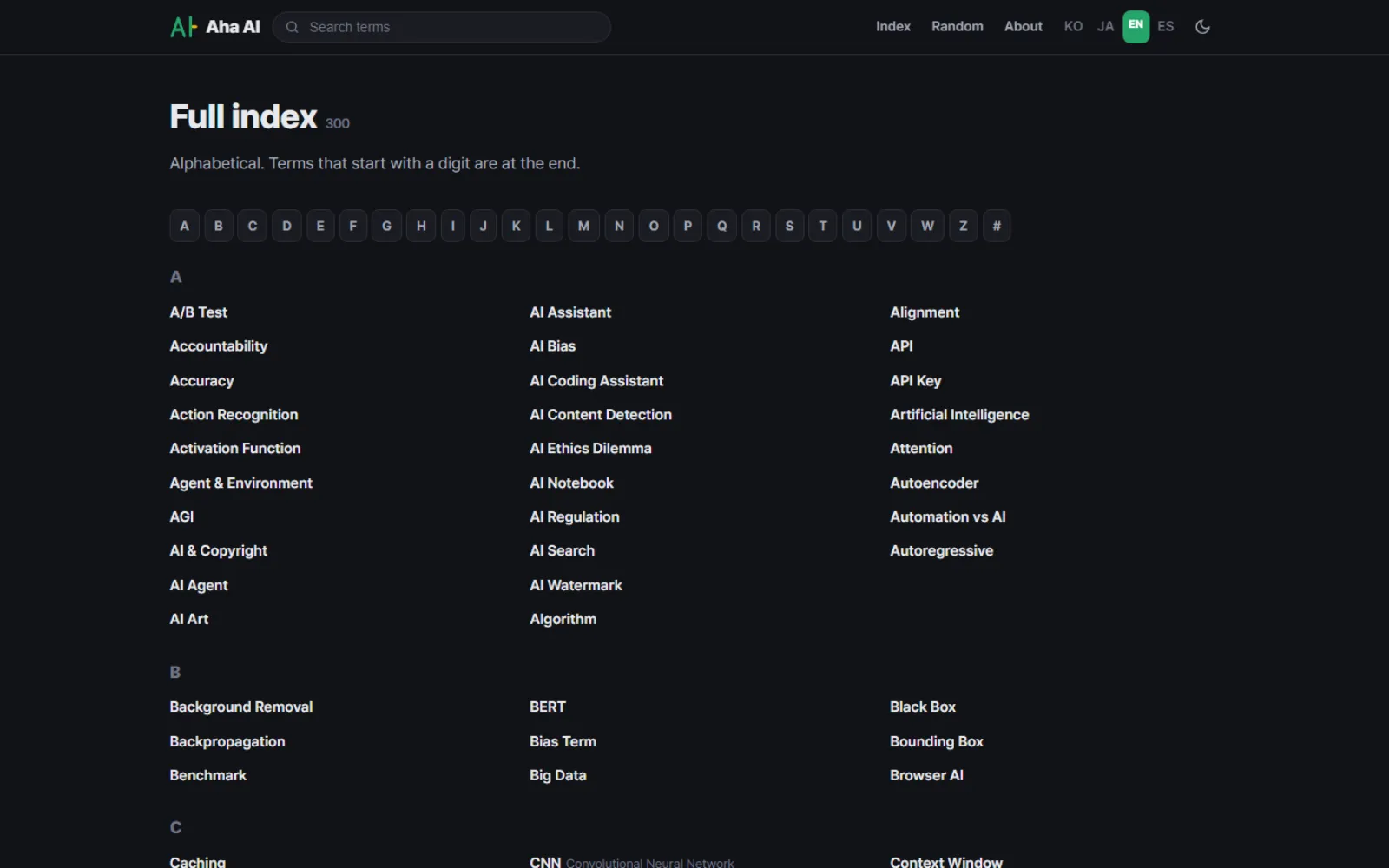
Nine categories, each filtered again by difficulty. The full index lets you sweep all 300 at once.
What one entry looks like
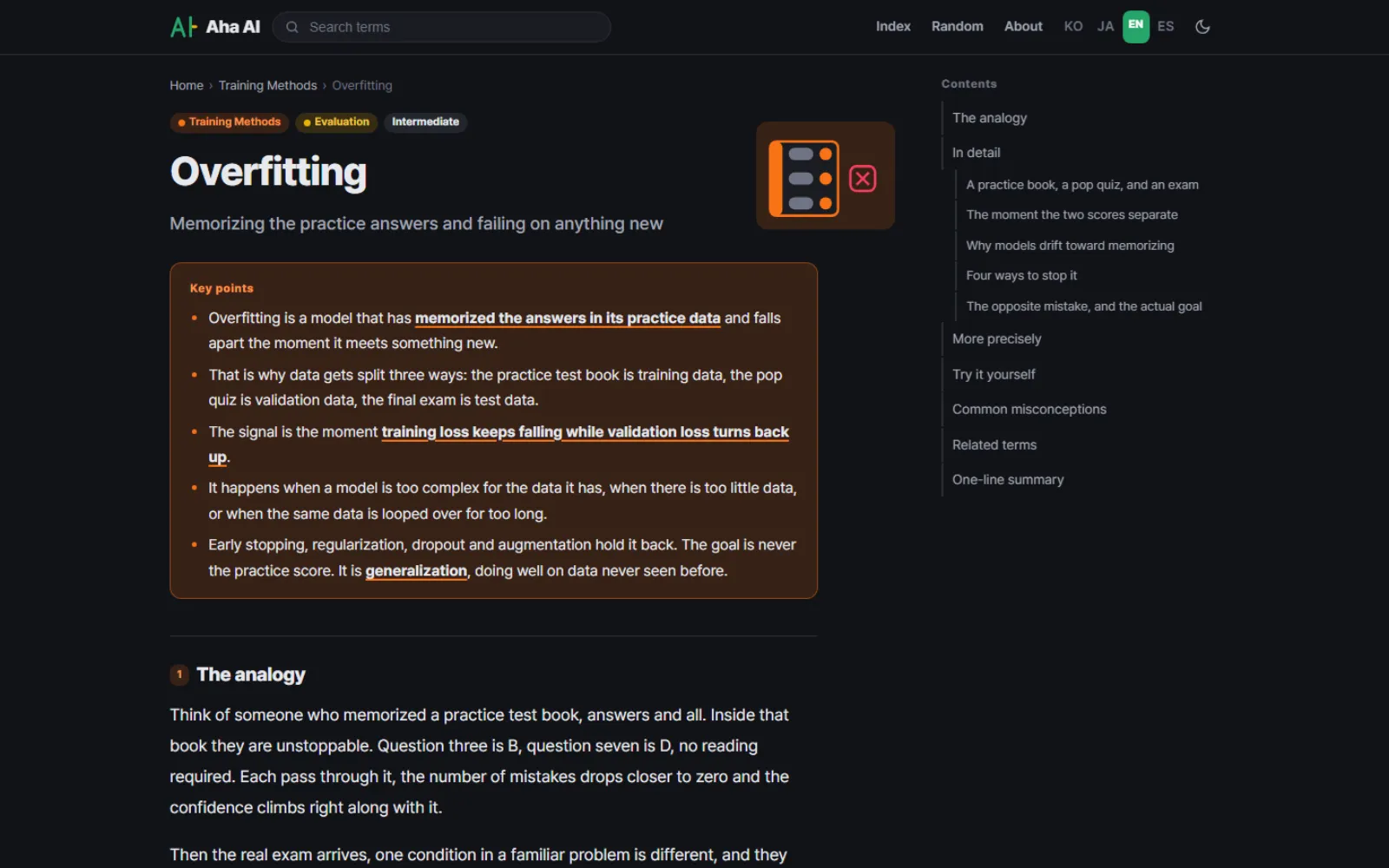
A key-points box comes first, then the six sections starting with the comparison. The table of contents on the right lets you take only the section you need.
Who it is for
- Students who have been skipping past every unfamiliar word in AI news
- Teachers who have to explain an AI term in class and need a comparison to hand
- Anyone using AI who wonders what is going on inside it